Ask Swedenborg
AI-assisted theological research
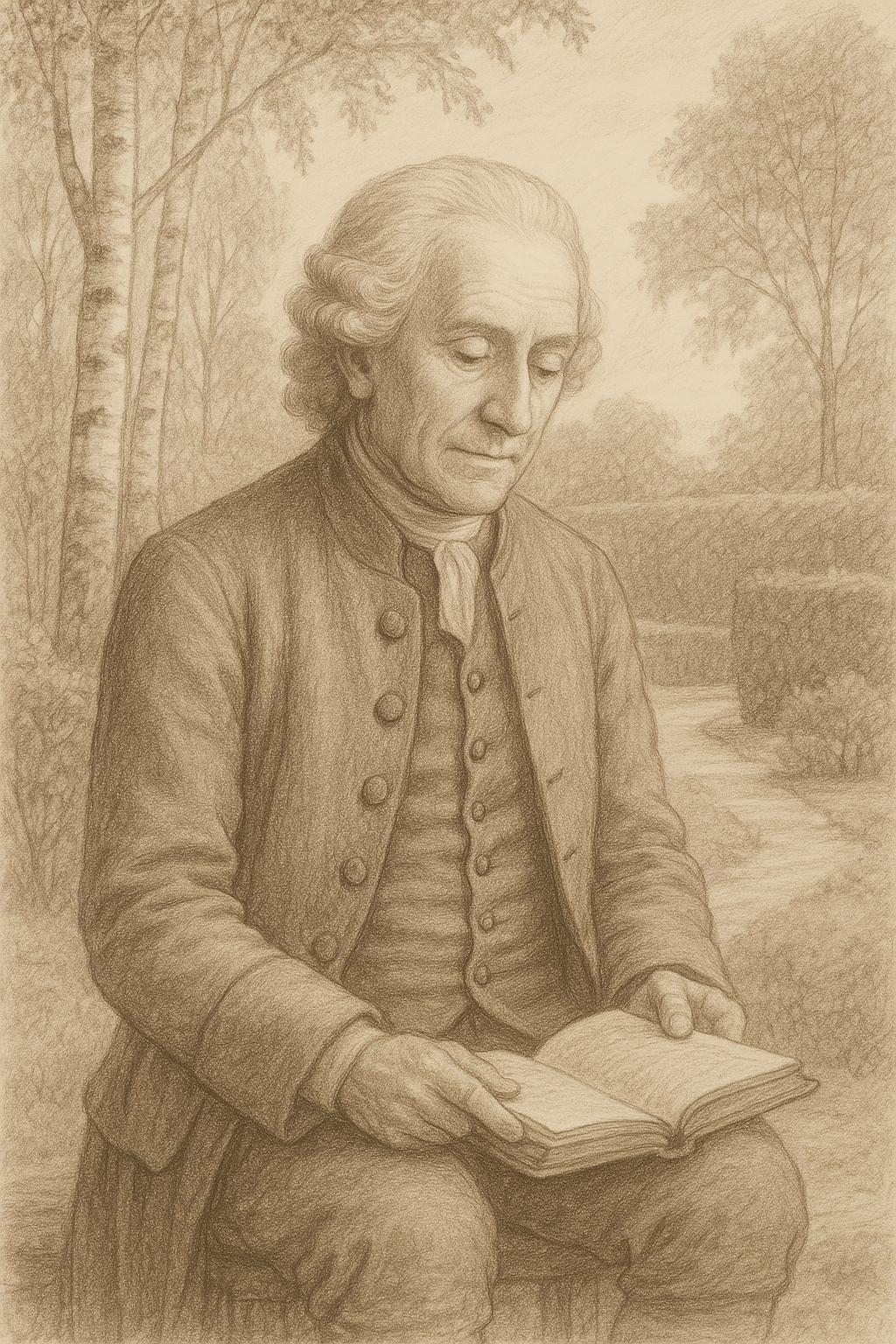
Scientist, Philosopher, Theologian
Emanuel Swedenborg (1688–1772)
Emanuel Swedenborg was one of the most remarkable thinkers of the early modern world — a scientist and engineer whose work laid foundations in anatomy, metallurgy, astronomy, and psychology, and later a theologian whose writings reshaped Christian thought.
Born in Stockholm in 1688, Swedenborg was educated during the height of the Enlightenment. For decades, he worked as a natural philosopher and government assessor, publishing influential studies on subjects ranging from the structure of the brain to the motion of the planets.
In midlife, Swedenborg turned his attention to theology — not abandoning science, but extending it. His later works sought to explore the inner meaning of Scripture, the structure of the spiritual world, and the relationship between divine love, wisdom, and human freedom.
A Life Bridging Science and Spirit
Swedenborg’s theological writings are distinctive for their method:
- Systematic and analytical, shaped by scientific reasoning
- Textually grounded, rooted in detailed biblical exegesis
- Psychologically sophisticated, centuries ahead of modern depth psychology
- Non-dogmatic, emphasizing lived faith over institutional authority
He proposed that the natural and spiritual worlds are connected through correspondences — lawful relationships between physical realities and spiritual meanings — and that Scripture operates on multiple levels simultaneously.
Why Swedenborg Matters Today
Swedenborg’s work continues to influence:
- Theology and biblical interpretation
- Philosophy of mind and consciousness
- Psychology and depth symbolism
- Religious pluralism and spiritual freedom
- Modern discussions of meaning, ethics, and inner life
His ideas anticipated later developments in psychology, systems thinking, and symbolic interpretation, making his writings uniquely suited to careful, contextual study.
This App and Swedenborg’s Works
Ask Swedenborg is designed to help readers navigate the scale and complexity of Swedenborg’s writings responsibly.
This tool:
- Assists research through AI-generated summaries and citations
- Preserves clear attribution to original sources
- Encourages verification against primary texts
- Makes no claim to replace direct reading or scholarly study
Every response is clearly labeled as AI-assisted.
A Note on Interpretation
Swedenborg’s works are dense, precise, and interconnected. This application does not claim authority over their interpretation. Instead, it aims to support thoughtful exploration — helping users locate passages, understand terminology, and trace themes across works.
As Swedenborg himself emphasized, truth is best approached freely, rationally, and with humility.
Sources
All texts referenced in this application are drawn from:
- Public domain translations of Swedenborg’s works
- Public domain biblical texts
- User-created notes and annotations
Original sources remain essential and are always encouraged.